This series of animated videos was developed for The Greater Houston Partnership's UpSkill Houston initiative. They're updating their website, but due to popular demand for these videos, we're making them (and the associated copy) available on our site:
Soft skills are key to successful careers.
Certain technical skills may be required for specific careers or in particular industries. But there are other skills that are necessary regardless of industry, career or work setting. They’re becoming more important as technology evolves and changes the way people work. These skills are called soft skills and knowing how to recognize and demonstrate them is crucial.
UpSkill Houston and Red & Black have partnered to highlight many of the soft skills that are key to career success, all of which are transferable between industries, as well as in your personal life. Learn what these skills are, how you can develop them, and how to apply them in career settings.
- WHAT ARE SOFT SKILLS? Employability Skills. 21st Century Skills. Life Skills. Whatever you call them, skills such as problem solving, gratitude and communication are the skills employers continually look for in employees.
- COMMUNICATION SKILLS: Communication affects almost everything and everyone. But do you know what communication really means?
- CREATIVE THINKING: Think creativity only applies to areas like writing, music and art? See where creativity really fits within a business, organization or team.
- CRITICAL THINKING: What exactly is critical thinking? Learn how developing critical thinking skills can help you progress in your career.
- GRATITUDE & APPRECIATION: You might not think expressing gratitude and appreciation are skills that apply in business. But they are skills that can actually drive business success.
- GROWTH MINDSET: The world — and the workplace — are rapidly changing. See what it means to have a growth mindset, and why employers value it.
- PERSONAL FINANCE: See how learning to manage your personal money can affect your performance at work and, by extension, the performance of your workplace as a whole.
- PROBLEM SOLVING: Problem solving means more than just addressing a challenge after it occurs. Learn what else it means and why employers value problem solvers.
- RESEARCH & ANALYTICAL SKILLS: It is more than surfing the internet. Finding accurate and credible information that you can analyze and summarize are highly valuable skills in many jobs and occupations.
- RESUME WRITING: Companies hire people to satisfy a need or help solve a problem, and a resume is a place to highlight the relevant skills you have that meet that need or solve that problem. Learn what to focus on when writing your resume.
- SAFETY MINDSET: Working safely is important regardless of your work environment. Learn why having a safety mindset benefits you, your employer and those around you.
- SILO BUSTING: Many companies operate multiple departments, divisions or groups, which may not always collaborate or work together. Learn what it means to break a “silo” in a work setting and how doing it can improve the workflow around you.
- TEAMWORK: Being able to work on a team is as important in a work setting as it is while playing sports. See what skills can help move a project forward and drive success.
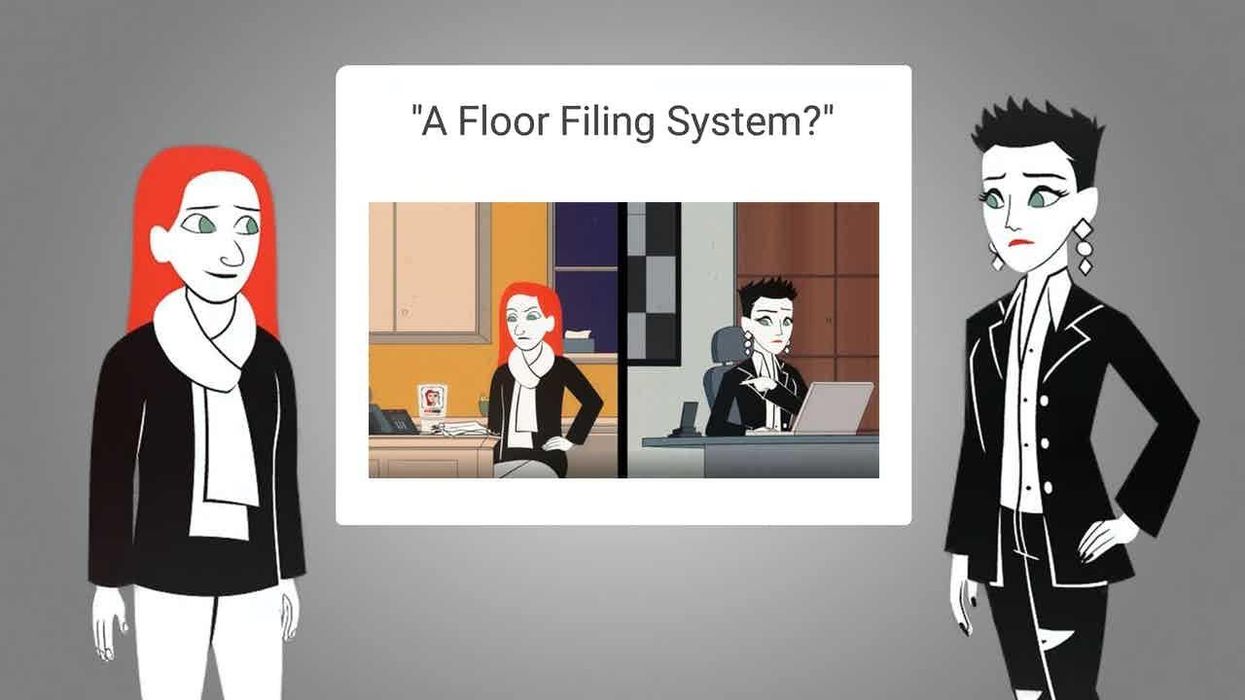
Overwhelmed by piles of paper? Well, if you’re like Red, longing for a perfectly clean desk, you might use filing cabinets or, at least, neatly stacked file folders. But a filing system that uses the floor of your workroom? And what happens when you run out of floor space?!
Curious about Black’s advice? Check out this book excerpt …Too Much Paper — Not Enough Time.
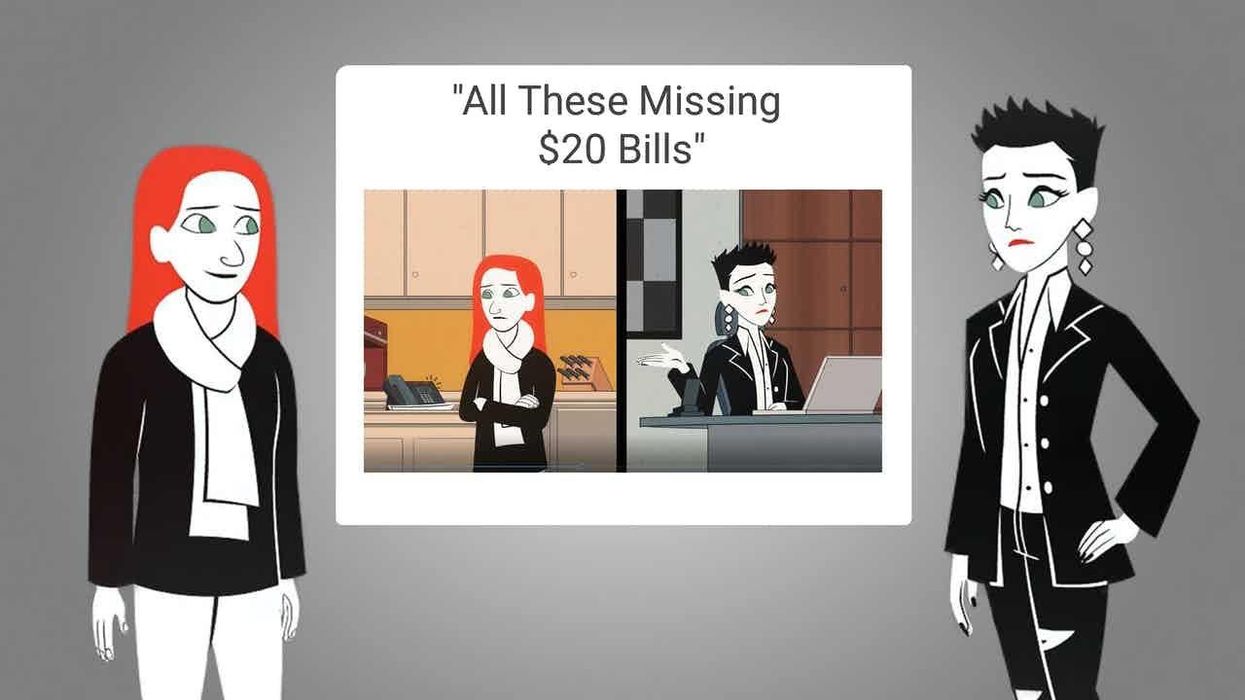

Can you relate to Red’s one-man (oops, make that one-woman) show? And at what point do you ask for help?
Shop, Social Media & Site — UPDATE!